
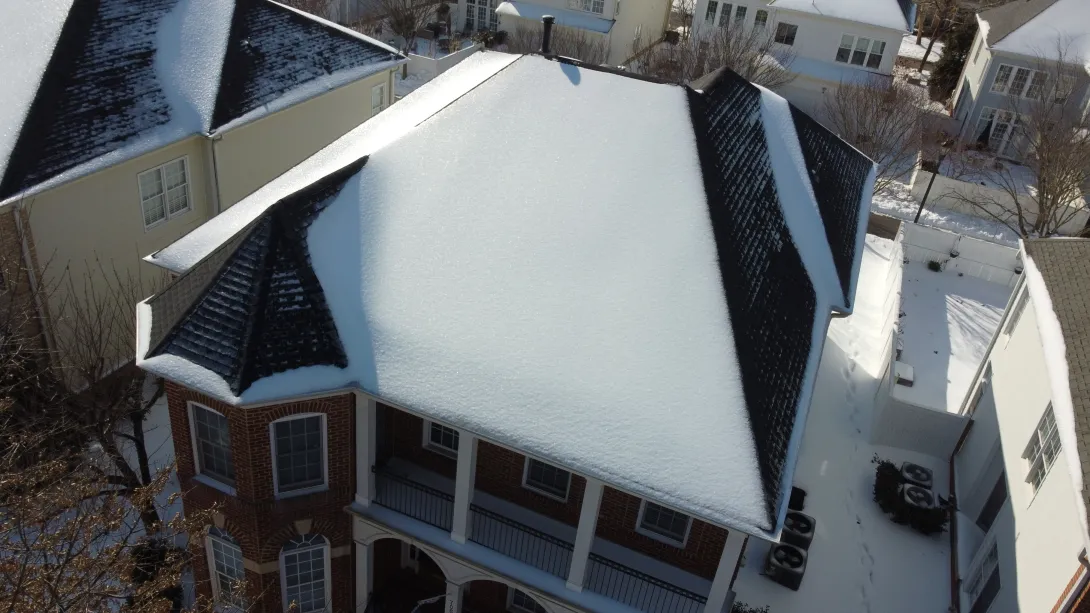
Inspecting homes with snow on the ground in Maryland presents unique challenges that both inspectors and clients should understand. While winter inspections are common, snow cover can temporarily conceal critical components, requiring additional care, documentation, and sometimes follow-up evaluations.
Roofing is the most obvious limitation. Snow and ice can obscure shingle condition, flashing details, and signs of active leaks. Inspectors look for visible indicators from the attic, such as water staining, insulation compression, or daylight penetration. From the ground, they evaluate roof lines for sagging, uneven snow melt patterns, and proper ventilation.
Exterior components may also be partially hidden. Snow can cover lower siding, foundation walls, window wells, decks, patios, and grading. Because proper drainage is especially important in Maryland’s freeze-thaw climate, inspectors pay close attention to visible slope, downspout extensions, and areas where melting snow may accumulate near the foundation.
Driveways, walkways, and exterior steps may be icy, limiting safe access. Safety always takes priority. When areas cannot be safely inspected, they are documented as obstructed.
Mechanical systems, however, often benefit from cold weather testing. Heating systems can be evaluated under real operating conditions, and inspectors verify proper heat distribution, flue performance, and thermostat response.
A winter inspection in Maryland requires experience, caution, and clear reporting. When snow limits visibility, inspectors note the restriction and may recommend re-evaluation once conditions improve—ensuring buyers make informed decisions year-round.


Comments